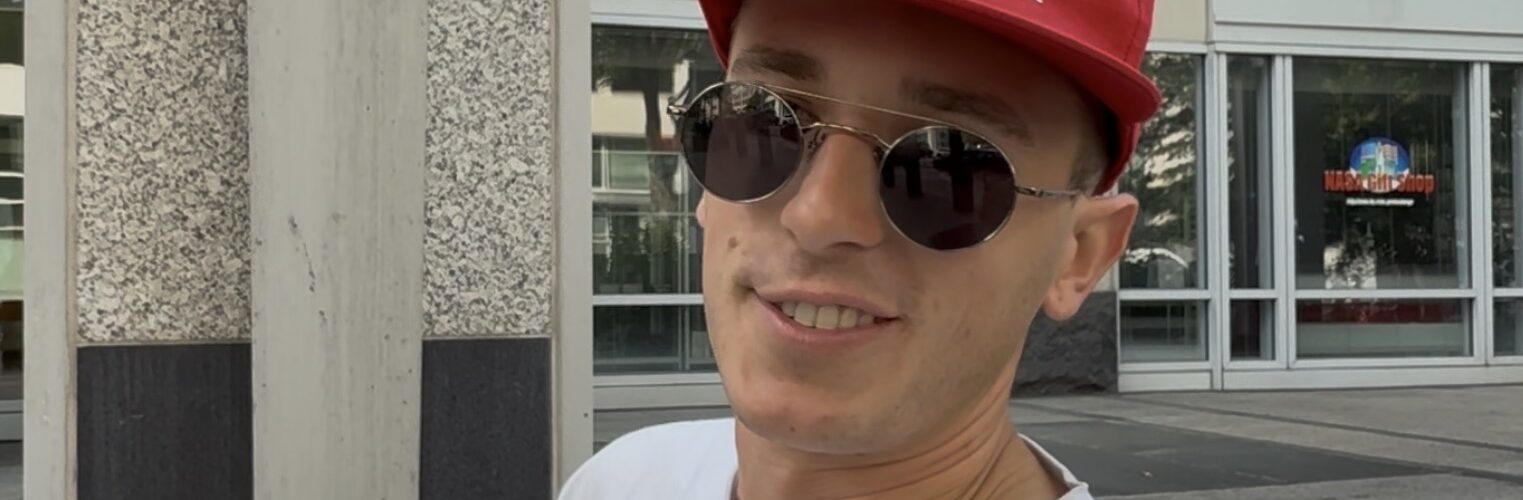

Washington DC—Longtime activists from the DC, Maryland and Virginia area joined hands on Wednesday night to cherish the life of a charismatic activist who kept night watch at the Peace Vigil during a most tumultuous period in its 44 year history. One by one they spoke of how Will Roosien touched their lives and left indelible memories, shared fond moments of joy and hope in their hearts. They told their individual stories, read poems in his honor, and shared their delight in the memories of how he influenced them. Yet they shared a common rumination that he should not have been taken so early from them as his life had barely begun.
He now takes his place at the Peace Vigil among a long lineage of venerable activists who gave their final full measure in the continuing battle for peace, justice, and the end of global nuclear armaments. Beginning with the Vigil’s founder, William Thomas, there have been many Peace Activists who have given such final full measure before Roosien arrived at the Peace Vigil. He certainly will not be its last fading voice. Roosien stood out in unique ways as an unparalleled unifying force, his influence on others was revealed in the stories they told of him.
How Does One Measure Another’s Influence?
At 23, Roosien joined the William Thomas Memorial Peace Vigil as a traveling activist, seemingly and accidentally falling into its fold at a time when rogue powers had begun dismantling democratic institutions across the city, splintering the architecture of the republic and its government, and driving deep fissures between the US and its allies. There was much peace fieldwork to be done and Roosien came ready to do it.
Roosien was drawn to the Peace Vigil and specifically expressed a desire to make a positive difference in the world and encourage other youth to join him with his efforts. He actually sought out the Peace Vigil and did not happen on it by chance as many activists do.
Roosien came to the Peace Vigil after previously traveling through 23 countries and experiencing many cultures abroad, the most recent of which was Chile. He could easily relate and connect with anyone he met and he could speak to others on a personal level by sharing experiences he had in common with them. He would often begin by asking others “where are you from?” and build relationships with others who had also traveled abroad by sharing less significant details of the countries they traveled.
He began a 90 day commitment to the Peace Vigil during mid-June last Summer with an idealistic approach and was not afraid to speak up for what he believed in, while challenging others if he found their facts were out of alignment with what he could prove otherwise. But he was not aggressive in the act of disagreement. This made him both approachable and likable.
His curiosity of opposing ideas and other points of view and his ability to speak to others was a skill not often seen in the activist community. He sought to reach beyond divisions and this ability made him particularly popular among the other activists. He would not agree with consensus for consensus sake. He sought truth and was his own man.
He had come to Washington DC early in the Summer with meager means, and he pitched a tent somewhere along Beach Drive near the National Zoo in a hideaway thicket of the woods of Rock Creek Park. He would show up to cover the shifts at the Peace Vigil whenever there was a need of coverage or if shifts otherwise had no volunteers. Then he extended those shifts as the needs of the Peace Vigil increased.
The Summer heat is as daunting a season as is the dark days of Winter cold in Lafayette Park at the Peace Vigil, for it offers no shade and no protection from the elements. The heat of summer lingers in the red bricks long into the deep of night after the cacophony of tourists and rabble rousers have gone, sucking the energy and vitality from any activist who sits at the tent; and drains even the vitality of the young, who are typically more resilient, can find it relentless. They too succumb to its driving heat and relentless drone of bullhorns, protests, and curiosity seeking tourists. But here Roosien found his footing and an opportunity to do something good inside the vortex of chaotic times. It may be said that he did much more than sit at the Prace Vigil, he energized it with his presence, his originality, and his words.
He wore his red hat inscribed’Not Good,’ a rebuke to Make America Great Again,’ a tired and worn out slogan. He often carried a sign reading, “Hate does not make America Great.”
He carried his own signs back and forth from his tent in the woods to the Peace Vigil until Melaku-Bello said he could leave them in the Peace Vigil tent. Not everyone received such a privilege bestowed to them.
He took detailed notes of his experiences and his cursive writing style was both articulate and artistic. He had planned to write and publish a book about his travels and interactions with others. His notes from the Peace Vigil would certainly have shown his insights and philosophical points of view.
The Man Who Refused To Go
On Friday, September 5, 2025, on Friday night after a conservative right wing media personality described the Peace Vigil to President Trump during a press meeting at the White House, as an “eyesore” and “anti-American,” Trump ordered the immediate removal of the Peace Vigil. That afternoon, Melaku-Bello was joined with Will Roosien and many other activists through that night and they began a round-the-clock watch. They stayed despite Trump’s order to “immediately remove” the Peace Vigil. They expected the imminent removal of the Peace Vigil tent from its court-protected place on the red bricked sidewalk and wanted to be there to defend its right to remain. Then night gave way to daylight and they lasted through the first day, expecting a police raid at anytime.
After a 40-hours’ marathon watch, it seemed the removal threat had passed and the others left. Roosien remained and continued the Peace Vigil after Manager Philipos Melaku-Bello, was the last to leave for some rest. Within minutes of Melaku-Bello’s departure, several US Secret Service walked up to the Vigil tent. They had been waiting for this moment and were likely monitoring the Peace Vigil from several cameras mounted on lampposts nearby.

They asked Roosien to vacate the tent so they could remove it. He told them it was his First Amendment right to be there. They insisted leave. He refused to go. The Secret Service summoned a team who suddenly “came out of nowhere” to forceably remove the tent but Roosien, in a fearless act of defiance, almost certain to result in his arrest, jumped on top of the tent to protect it. He was detained and US Secret Service removed the tent, its suport structure, signs, and anchors. They transported it in a truck to an impoundment station at Haines Point. His act of defiance was hailed as a legendary example of resistance and endeared him to the other activists in a special way.
He reflected at length about why he stood against about a dozen police during an interview at the moment he stood as a resistor against overwhelming odds and against the increasingly oppressive police presence in Lafayette Park. More and more Secret Service had been bringing their dog team every hour to check the area around the Peace Vigil tent for drugs or explosives as a form of pressure-harassment of the vigilers—searching for items Park Police and Secret Service knew the vigilers would not keep at the tent.
Roosien spoke to DCMediaGroup on September 15, 2025, several days before he left Washington DC for the last time. He told of what he believed was the heart and soul of the purpose of the Peace Vigil—that it was a “visual representation” of the First Amendment in action, “one of the most important rights in the United States,” and why he stood up for it the day Secret Service came to take it away.
“I think it’s important that even if you’re in a losing battle where you’re outmanned, that the people who are making the transgressions against you, know that there was resistance, he said. “If evil is beating good it’s important it’s not easy.” He said that was his guiding philosophy.
The next day, many supporters gathered around the area where the tent once stood, Roosien among them. They vowed to fight to keep the Peace Vigil going even without a tent they depended on to protect them from bad weather days. Melaku-bello put up a giant umbrella and several brought chairs and signs, although it was much less of a presence than before the raid. But the Peace Vigil had beaten the odds because its activists persevered. They continued their presence on the red bricks anyway.
Peace Vigilers Sound Roosien’s Memory
On Wednesday night after disk, while the DC Activist Street Band played the song, “We Shall Not Be Moved,” in the background, Nadine Selior and her friend Karen set up a slideshow with photos of Roosien and other Vigilers and projected them onto a white banner they hung up on the metal fence. Above that they hung another hand-painted banner reading, “We Will Continue to Fight,” a symbol of Will’s courage and commitment.
The metal fence, on which the banners were hung, was erected around Lafayette Park several months ago, restricting access from anywhere near the White House as well as the red bricked location where the Peace Vigil once stood. So they set up Will Roosien’s memorial service on a small dirt block remaining accessible on Eye Street, where activists of Black Lives Matter Plaza once clashed with police during the civil rights movement that year against police violence. They added streamers and several carried signs about peace and anti-war messages.
BLM Plaza signs and markings had long been removed as a result of pressure placed from the White House on DC Mayor Muriel Bowser’s administration. It may be said that she complied in advance by removing Black Lives Matter bricks and markings before she was forced to do so.
The Peace Vigil did not comply in advance when police went into Lafayette Square to take it down. That was partly a result of Roosien’s courage and doing.
The activists set out rows of candles and hooked up a battery to a speaker. It was cold and dark so several wore headlamps to help the assembled group see the speakers.
Carrie Muniac sang a song she wrote in Roosien’s memory.
Shell, a ling-time Peace Vigil activist folded hundreds of cranes over the days after she learned of Roosien’s passing. She hung them in rows in the tradition of the Japanese custom in remembrance of someone dear that has passed.
Phillipos Melaku-Bello told a heart-warming story of Roosien and his influence on the other activists with his zeal and compassion for others. He drew amazement even from the older activists who had been around a long time and were not so moved as they were when Roosien showed up.
Luci Murphy, a longtime activist and songstress, led the group in a participatory Spanish song “We Want Peace And Freedom In This World” an easy sing along because she made it easy for them to sing. It was about peace and perseverance. She also spoke of her personal experiences of overcoming the difficulties of life hardships and the necessity for having tenacity in the struggle to live despite hardships. Her message of survival was tempered with the wisdom she gained as a necessity to care for her children. She had no choice but to survive difficult times.
Nadine Selior told of many conversations she had with Will Roosien and their friendship despite their differences on issues. She said he was able to come to accept her points of views on many issues of the present times.
Each story conveyed a deep love for a young man early departed. No one said out loud that they loved Will but they did not need to. No one broke down inconsolably moved. But one could feel their broken hearts. They danced to a song about joy and happiness and everyone posed for a photograph. Then they cleared out of the small space and went home leaving the dusty dirt square silent. In the background the machines continued their work in Lafayette Park, tearing up the place where the blue tent once stood. The Peace Vigil had survived anyway. Against the odds, it proved its endurance.
The hotline for suicide prevention and awareness is 988. The 988 Suicide and Crisis Lifeline is a 24-hour, toll-free, confidential suicide prevention hotline available to anyone in suicidal crisis or emotional distress.